Reset your brain.
Reclaim your life.
Ampa One reactivates the brain circuits that power courage and resilience.



Find your inner strength
When life feels too heavy, the brain’s circuits for courage can dim. Ampa helps turn them back on—so you can rediscover strength, clarity, and balance.
Hear what they have to say

.avif)

How does TMS work?
It’s simple, safe, and effective

A TMS coil generates powerful, focused magnetic pulses.

During treatment, a technician places the TMS coil on the scalp over the target area.
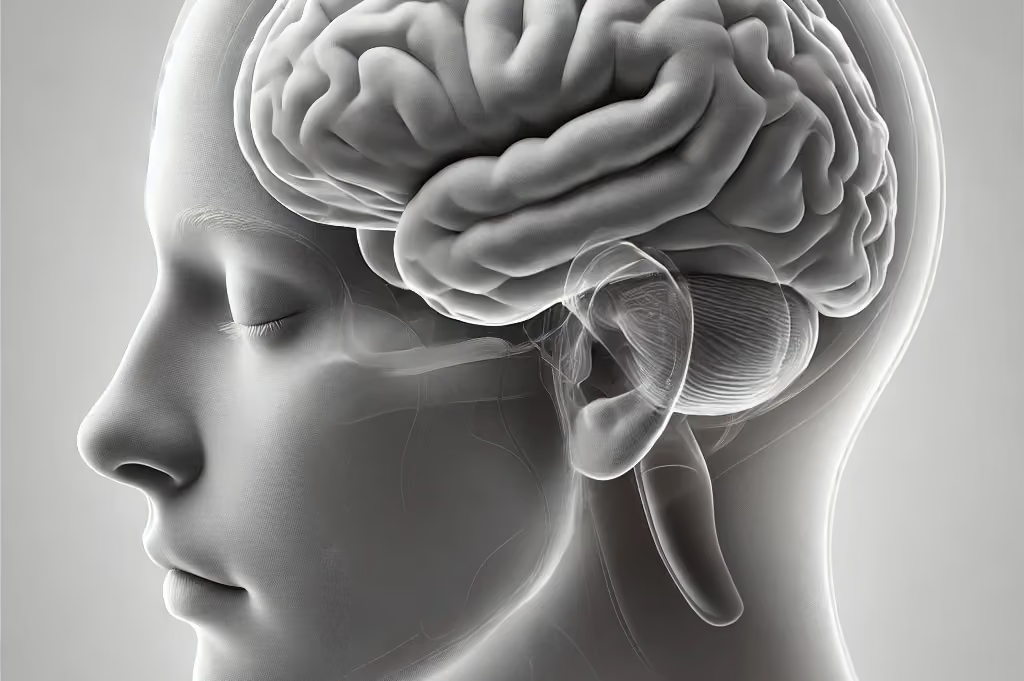
The magnetic pulses activate the underlying brain circuits safely and non-invasively.

A single session involves stimulating the circuits hundreds of times over a few minutes.

These repeated activations strengthen the target circuits via the mechanisms of neuroplasticity: the brain’s ability to rewire itself in response to stimulation.
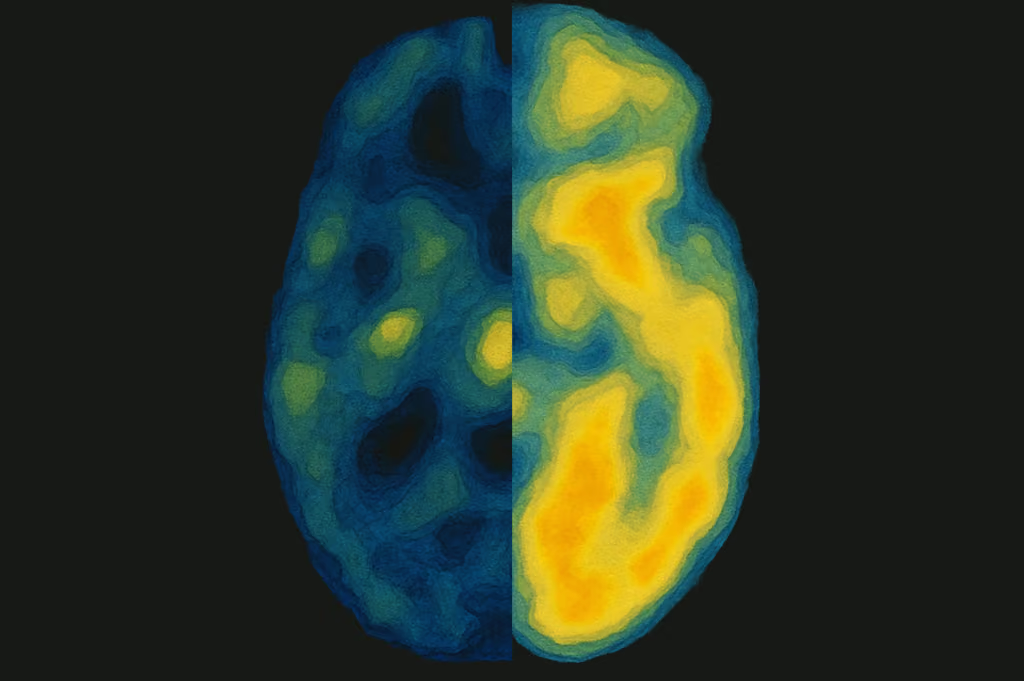
A typical course of 20–40 sessions can deliver long-lasting changes in brain activity, restoring normal function in hard-to-treat conditions such as major depression.

Newer accelerated TMS protocols deliver many sessions per day to reduce the total number of visits needed.

Some recent TMS protocols have begun to add medication to enhance the brain’s plasticity before treatment in order to make the effects of each session stronger and more durable.
What patients are saying
“Before, it was 2-dimensional. Now, it’s 3-dimensional. It feels like something else has been added inside my head and it is so relieving.”
- Ampa patient
“I used to talk about finding joy in the cracks of life but I don’t have to look in the cracks anymore. Joy is accessible to me.”
- Ampa patient
“I have had TMS twice before, but receiving TMS this time has every other treatment beat by far. I felt like a whole new person within 24 hours of finishing treatment.”
- Ampa patient
“I feel like this is who I was meant to be. It feels good to be me.”
- Ampa patient
“For years, I struggled with severe depression, anxiety, and PTSD. It’s hard to put into words how different my life looks now. I feel free. I’m finally able to work towards a life I want to never take for granted again.”
- Ampa patient
“This treatment changed my life completely. I think going forward that I'll really think of my life in two halves: before this treatment, and after. The relief I feel is impossible to overstate.”
- Ampa patient