TMS vs. Ketamine and Esketamine: Comparing Treatment-Resistant Depression Options

Depression is considered treatment-resistant when a patient has not responded adequately to two or more antidepressant trials at the right dose and duration. At that point, most people move beyond another medication switch and weigh three established options.
Transcranial magnetic stimulation (TMS) uses focused magnetic pulses to stimulate specific brain circuits, most often the dorsolateral prefrontal cortex, without anesthesia. Ketamine and esketamine (Spravato) act on NMDA receptors to produce rapid antidepressant effects and support synaptic plasticity, delivered by IV infusion or intranasal spray. Electroconvulsive therapy (ECT) induces a brief, controlled seizure under anesthesia and remains the longest-studied option for severe cases.
All three carry FDA recognition for depression. None is experimental. Each has its own published evidence base and its own profile of benefits and burdens. No single option wins for every patient. Your choice turns on practical factors: your treatment history, your tolerance for side effects, the time each demands, and the support you have at home. The sections below work through each one.
What Makes Depression "Treatment-Resistant"?
Psychiatrists label depression treatment-resistant when a patient has not improved after two or more adequate antidepressant trials. The word "adequate" carries specific meaning. Each medication must be taken at a therapeutic dose for long enough, usually six to eight weeks, to give the drug a fair chance to work. Someone who stopped a prescription after ten days because of side effects has not completed an adequate trial, even if nothing improved in that window.
That standard matters beyond diagnosis. Insurers use the two-trial threshold to decide whether they will cover TMS, Spravato, or other advanced treatments. Many plans require documentation of the specific drugs tried, their doses, and how long each was taken before approving coverage. A clear record of past medications and their outcomes often determines how quickly you qualify.
Once two well-run trials have failed, a third antidepressant tends to help fewer people than the first two did. Large trials such as STAR*D found that remission rates decline with each successive medication step, from about a third of patients at the first medication down to a much smaller share by the third. That declining return is why clinicians and patients start looking past standard antidepressants entirely. TMS, ketamine and esketamine, and ECT each work through different biological pathways than the serotonin-focused drugs that came before, which gives them a real chance to help when those drugs did not. This guide compares the three so you can see which best fits your treatment history, tolerance for side effects, and daily circumstances.
How Each Treatment Works
Each treatment changes brain function through a different route, which explains why they differ in speed, side effects, and who they suit.
Transcranial Magnetic Stimulation (TMS)
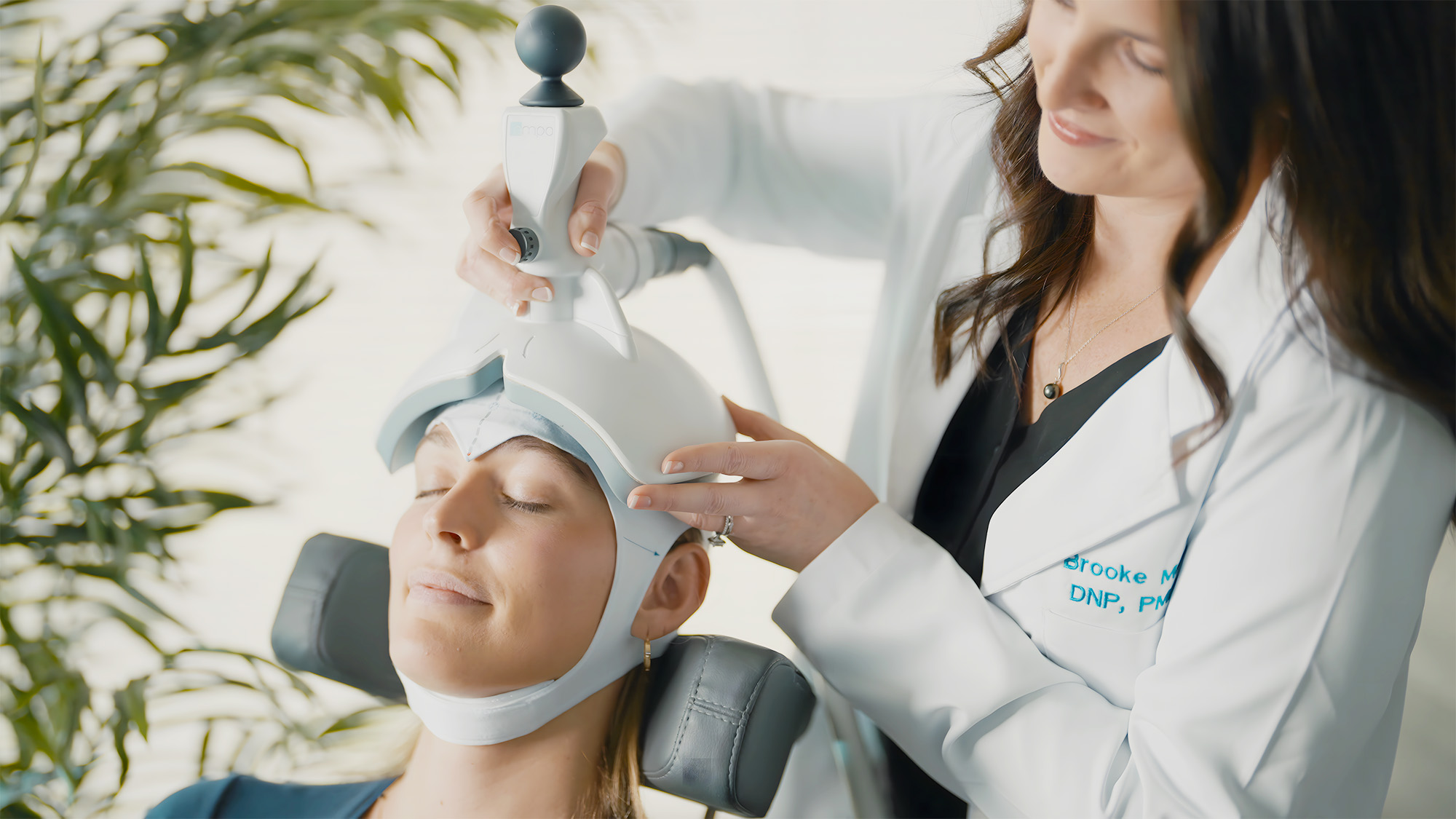
TMS places a magnetic coil against the scalp to deliver focused pulses to a specific brain region, most often the dorsolateral prefrontal cortex. That area regulates mood and connects to deeper circuits that run underactive in many people with depression. The pulses induce small electrical currents in the targeted tissue, and repeated sessions gradually strengthen activity across those circuits. The FDA cleared TMS for treatment-resistant depression in 2008, and systems from NeuroStar, Neuronetics, BrainsWay, Magstim, and MagVenture now deliver it in clinics across the country. A standard course runs daily sessions over four to six weeks. You stay awake and alert throughout, with no anesthesia and no recovery time.
Ketamine and Esketamine (Spravato)
Ketamine works through a mechanism unrelated to standard antidepressants, which is part of why it helps people those drugs failed. Rather than adjusting serotonin over weeks, ketamine blocks NMDA receptors in the brain, triggering a rapid increase in synaptic plasticity. New and strengthened connections between neurons can lift mood within hours to days rather than weeks. Two forms exist. Intravenous ketamine is given as an infusion and used off-label for depression, meaning clinicians prescribe an approved drug for a purpose the FDA has not formally cleared. Esketamine, sold as Spravato, is a nasal spray derived from ketamine; the FDA approved it for treatment-resistant depression in 2019 based on pivotal trial data showing meaningfully higher response and remission than placebo when paired with an oral antidepressant. Both require monitoring in a supervised setting, because they can cause temporary dissociation, a sense of detachment from your surroundings that fades as the dose wears off.
Electroconvulsive Therapy (ECT)
ECT is the oldest and most intensive of these options, and it works by inducing a brief, controlled seizure while you are under general anesthesia. Clinical evidence indicates ECT produces substantial improvement in about 80% of patients with severe, uncomplicated depression, among the highest response rates of any treatment for the condition. Electrodes deliver a measured current to the brain, and the resulting seizure appears to reset neurotransmitter activity and neural connectivity in ways researchers still study. The FDA regulates ECT devices, and psychiatrists have used the treatment for severe depression for decades. Because it requires anesthesia and produces measurable effects on memory, clinicians typically reserve ECT for more severe or urgent cases. A later section covers where it fits relative to TMS and ketamine.
Comparing Effectiveness, Onset, Durability, Side Effects, and Cost
The five dimensions below capture what most patients weigh. Response rates, speed, durability, side effects, and cost each pull in a different direction, so no single column dominates every row.
Dimension
TMS
Ketamine (IV)
Esketamine (Spravato)
ECT
Response / remission
~50–60% response, 30–35% remission with standard daily protocols; accelerated courses report response up to 70–90% and remission up to 70–80%
50–70% show rapid response; remission varies
~50% response in trials supporting FDA approval
60–80% response, among the highest of any treatment
Time to first relief
Gradual, often 2–4 weeks (10–20 sessions)
Hours to days after first infusion
Within days to two weeks
Days to two weeks, often faster in acute cases
Relapse / maintenance
Durable for many; maintenance or reintroduction common within a year
High relapse without repeated infusions; maintenance often needed
Ongoing dosing, tapering to biweekly maintenance
Relapse common without maintenance ECT or medication
Common side effects
Scalp discomfort, headache, rare seizure risk
Dissociation, blood pressure rise, nausea during dosing
Dissociation, sedation, nausea; monitored 2 hours after each dose
Memory gaps, confusion, anesthesia risks
Cost & insurance
Widely covered for TRD after prior antidepressant trials
Often out-of-pocket; IV ketamine is off-label for depression
FDA-approved and increasingly covered, though prior authorization is common
Covered when medically indicated; requires anesthesia and facility resources
Ketamine and esketamine work fast, often lifting symptoms within hours or days, which matters when someone is in acute distress. That speed comes with a shorter tail: relief tends to fade without repeated dosing, so both lean on ongoing maintenance to hold their gains. TMS moves in the opposite direction. Improvement builds over several weeks with a standard course, but many patients hold their response longer between courses. That gap reflects a fast-moving area of TMS research, and results still vary by clinic and protocol.
How much each treatment demands of you separates the options as much as their biology does. TMS asks for a heavy upfront schedule of daily sessions across four to six weeks, though each visit is brief and requires no sedation, monitoring, or driver. Esketamine requires two hours of supervised observation after every dose, and IV ketamine carries a similar in-clinic commitment; both rule out driving yourself home that day. ECT delivers the strongest response rates in this comparison and demands the most: anesthesia, a recovery period, and the risk of temporary memory effects place it in a different tier of intensity.
Cost and coverage track how firmly each treatment sits inside insurance frameworks. TMS and Spravato hold FDA approval for treatment-resistant depression, which is why insurers typically cover them once a patient documents prior antidepressant failures. IV ketamine remains off-label for depression despite strong clinical support, so it frequently falls to out-of-pocket payment. For many patients, that coverage gap shapes the practical choice more than any efficacy figure in the table.
Comparison Methodology
The figures above draw on published clinical trials and real-world outcome studies, expressed as ranges rather than single numbers. Because depression treatment varies with each person's history and circumstances, these ranges describe what groups of patients experienced. They are not predictions for any one individual.
Which Treatment Fits Which Patient
Your daily routine, medical history, and comfort with certain experiences shape which path is realistic for you. None of the factors below diagnoses you or dictates a choice. They help you notice which options deserve a closer conversation with your psychiatrist.
If needles or anesthesia make you anxious, TMS may be worth discussing first. It uses no needles, no sedation, and no anesthesia, so you stay fully awake and alert throughout each session. IV ketamine requires an IV line, and ECT requires general anesthesia. Esketamine, delivered as the Spravato nasal spray, avoids needles but still requires monitored observation after each dose.
If dissociation concerns you, note that ketamine and esketamine both produce dissociative effects during treatment, a temporary sense of detachment from your body or surroundings. Some patients find these effects tolerable or even neutral; others find them distressing. If the prospect unsettles you, raise it, because TMS and ECT do not cause dissociation.
If your schedule is tight, consider how each treatment maps onto your calendar. Standard TMS involves daily sessions, often five days a week for six weeks, though newer accelerated protocols compress this into fewer days. Spravato requires clinic visits twice weekly at first, then tapers. Both require you to be present regularly for weeks. If sustained frequency is difficult, name that constraint early so your clinician can weigh accelerated or alternative schedules.
If you have already tried several treatments, your history matters for both eligibility and sequencing. Insurers frequently require documented failure of two or more antidepressant trials before approving TMS or Spravato. If you have already cycled through multiple medications, or a previous TMS or ketamine course helped only partially, that record gives your psychiatrist a starting point for what to try next.
If your support system or transportation is limited, plan around the recovery each treatment demands. After ketamine or esketamine, you cannot drive and need someone to take you home. ECT requires anesthesia recovery and typically a companion for the day. TMS leaves you able to drive yourself and resume normal activity immediately. If you live alone or lack reliable transportation, that reality favors treatments without a post-session driving restriction, and it is worth mentioning to your care team.
No single factor decides the right path, and most patients weigh several at once. Someone who dreads anesthesia but has a flexible schedule and strong support at home faces a different calculation than someone with a demanding job and no one to drive them. Bring the factors that apply to you into your appointment rather than ranking them yourself.
Where ECT Fits Relative to TMS and Ketamine
ECT remains the most intensive of these options and carries the longest clinical track record for severe depression. Clinicians generally reserve it for cases where symptoms are life-threatening or where speed of response outweighs the burden of anesthesia and cognitive side effects. Someone with active suicidal intent, catatonia, or psychotic features often needs a faster, more definitive intervention than a full course of TMS can provide.
Because ECT requires general anesthesia and induces a controlled seizure, it demands more medical infrastructure and recovery time than TMS or ketamine. That intensity is also why psychiatrists tend to consider it after milder options have failed, or immediately when the situation is urgent. In some cases a clinician may recommend ECT first to stabilize a patient, then transition to TMS or ketamine for maintenance once the acute crisis has passed. ECT answers a different clinical question than the other two, so this guide treats it as context rather than a fourth head-to-head contender.
Using TMS and Ketamine Together
Because TMS and ketamine engage different parts of the brain, some psychiatrists use them together rather than choosing one. TMS gradually strengthens mood-regulating networks in the dorsolateral prefrontal cortex, while ketamine and esketamine act rapidly on NMDA receptors to support new synaptic connections. A patient might start ketamine or Spravato for faster early relief, then continue TMS to build more durable improvement over several weeks.
Whether combining them makes sense depends on your history, your response to each treatment, and your tolerance for the time and cost of running two protocols. A treating psychiatrist can weigh those factors and sequence the two safely. Bring the question directly to that conversation rather than assuming the treatments compete for the same slot in your care.
Talking to a Psychiatrist About Your Options
A psychiatrist can weigh your full history, medication list, and medical conditions against the tradeoffs this guide covers. Treat these comparisons as preparation for that appointment rather than a decision to make on your own. If you are already weighing these options, book an appointment to review your history against them.
You might ask: Given my prior antidepressant trials, which option has the strongest evidence for my situation? How quickly might I notice relief, and how long is it likely to last before maintenance treatment? What side effects should I expect, and will they interfere with driving or work? Does my insurance cover TMS, Spravato, or ketamine, and what documentation do you need from me?
If dissociation, needles, anesthesia, or transportation worry you, name those concerns directly. Your psychiatrist can rule options in or out based on what you can realistically tolerate and support.
Frequently Asked Questions
Does insurance cover these treatments? Most commercial and Medicare plans cover TMS and Spravato (esketamine) for treatment-resistant depression after documentation of failed antidepressant trials. IV ketamine is used off-label for depression, so most insurers do not cover it and patients typically pay out of pocket. Coverage rules vary by plan, so confirming benefits before starting treatment prevents unexpected costs.
Can these treatments be combined with therapy or medication? Yes. Clinicians commonly continue oral antidepressants and psychotherapy alongside TMS, ketamine, or esketamine. Spravato is FDA-approved specifically for use with an oral antidepressant. Combining active treatment with ongoing therapy addresses both the biological and psychological sides of depression, and your psychiatrist will coordinate the medications you take during treatment.
What happens if the first treatment I try doesn't work? Failing to respond to one treatment does not predict how you will respond to the others. Because TMS, ketamine, and ECT work through different biological mechanisms, a patient who responds poorly to one can still respond to another. That independence is the practical benefit: a limited result early on still leaves you real options, which your psychiatrist can sequence or combine after reviewing your response.
How long before I know whether a treatment is working? Ketamine and esketamine often produce noticeable mood change within hours to days, while TMS usually requires several weeks of sessions before a clear response emerges. Your care team will track symptom scores throughout the course so decisions rest on measured change rather than impression alone.
Are the effects permanent, or will I need maintenance? Many patients need some form of maintenance to hold their gains. TMS patients may return for periodic sessions if symptoms recur, and ketamine or Spravato patients often continue on a spaced dosing schedule. Durability differs by person, and your psychiatrist will set a maintenance plan based on how you respond.
Can I drive myself to and from appointments? TMS involves no sedation, so you can drive yourself and return to normal activity immediately. Ketamine, esketamine, and ECT all cause temporary sedation or dissociation, so you cannot drive afterward and will need someone to accompany you or arrange transportation.
This article is for general education and is not medical advice. Depression, including treatment-resistant depression, is a serious condition. If you are considering any of these treatments, review your history and options with a qualified psychiatrist. If you are in crisis or having thoughts of harming yourself, contact emergency services or a crisis line right away.
Meet the TMS system built for what’s next
Ampa One brings accelerated protocols, precision neuronavigation, a compact footprint, and a flexible subscription model together in one streamlined TMS platform.