How to Find a TMS Provider Near You
TL;DR
Where and how to search for a TMS provider — search strategy, what to check on a clinic's site, how referrals and insurance directories work, and confirming protocol fit before booking.
Table of Contents
- How to find a TMS provider
- What to look for in a TMS provider
- TMS referrals
- The initial consultation
- Verifying clinic protocols
- Insurance directories
Finding a TMS provider usually starts with a straightforward search, but narrowing that list down to a clinic worth calling takes a bit more legwork. This guide covers the practical steps: where to look, what to check on a provider's listing, how referrals typically work, and how to confirm a clinic actually offers the protocol you're interested in before you book a consultation.
None of this addresses whether TMS is medically appropriate for you; that's a clinical question best directed to your own doctor or psychiatrist. What follows is about locating and comparing providers once you're already exploring the option.
How do I start searching for a TMS provider near me?
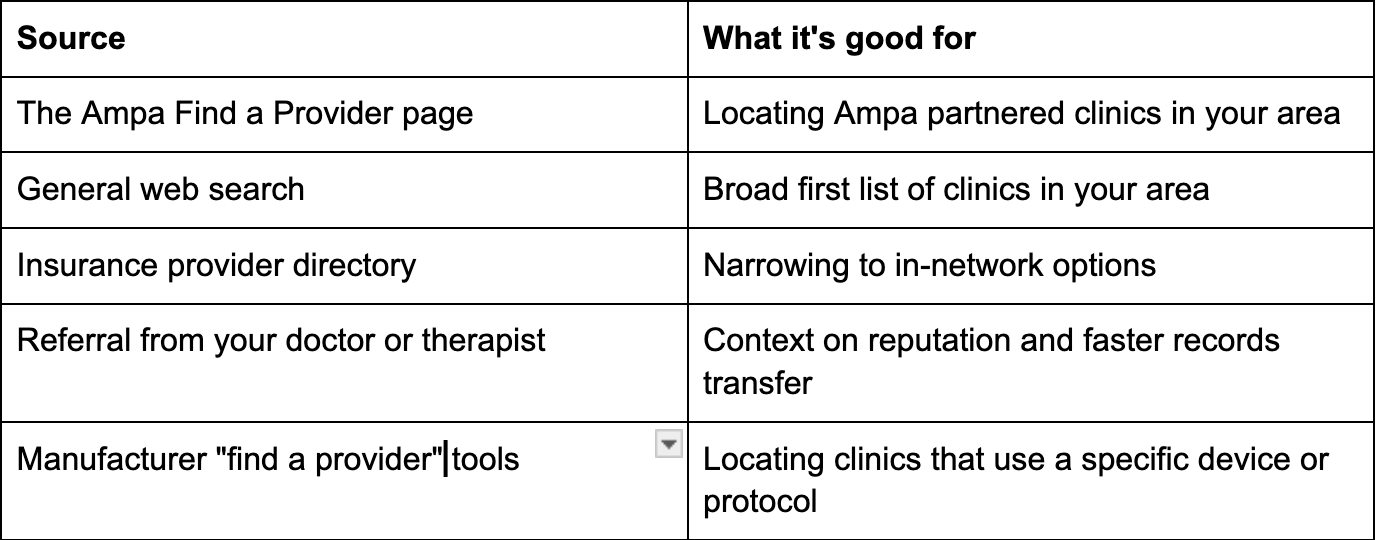
A general web search for "TMS therapy" plus your city or zip code is the most common starting point, and it typically surfaces a mix of psychiatric practices, dedicated TMS clinics, and hospital-affiliated programs. Your insurance company's provider directory is another practical first stop, since it can filter results to clinics that are already in-network for your plan. If you have a primary care doctor, therapist, or psychiatrist, ask whether they can refer you directly to a TMS provider they know, since a professional referral often comes with useful context about a clinic's reputation and typical wait times. Device manufacturers sometimes maintain "find a provider" tools on their websites, like this one, that list clinics using their specific equipment, which can be a useful filter if you already know which protocol you want.
What should I look for in a provider's listing or website?
Look for basic operational information: which protocol or protocols the clinic offers, whether they list accepted insurance plans, and whether they publish anything about pricing or financing. A clinic's website should make it reasonably easy to tell whether they treat the condition you're interested in and roughly what a course of treatment looks like in terms of schedule. If a listing is vague on these points, that alone isn't disqualifying, but it's a signal to ask directly during a call rather than assume.
How do referrals to a TMS provider typically work?
Many patients reach a TMS clinic through a referral from a psychiatrist or primary care provider, particularly when TMS is being considered after other treatments haven't provided enough relief. A referral usually involves your current provider sending over relevant records, which can speed up the intake process at the TMS clinic and support any insurance documentation later on. That said, a referral isn't always required to schedule a consultation; many clinics accept self-referred patients directly, though your insurance plan may still require a referral or a documented treatment history to authorize coverage. It's worth asking both your current provider and the prospective TMS clinic how referrals are handled at each end.
Should the initial consultation be in person or by telehealth?
Some clinics offer an initial consultation by telehealth, which can be a convenient way to ask questions and get a general sense of fit before committing to an in-person visit. Actual TMS treatment sessions, however, require in-person visits, since the equipment involves physical positioning of a coil against the head. If a clinic offers a telehealth consultation, treat it as a useful first conversation rather than a substitute for the in-person evaluation and mapping visit that comes before treatment begins; that first in-person visit is described in more detail in What to Expect During Your First TMS Session.
How do I confirm a clinic offers the protocol I want?
If you have a preference between standard TMS or an accelerated program that compresses a course into fewer days, ask directly rather than assuming from a website description, since terminology varies and not every clinic offers every option. Ask what equipment they use, how many sessions their standard course involves, and how long each session runs.
Can insurance directories help me find a provider?
Yes, your insurance company's online directory is one of the more efficient ways to build an initial list, since it filters to in-network clinics and can save you from discovering a coverage mismatch later. Directories aren't always current, though, so it's worth calling a clinic directly to confirm they still accept your specific plan before scheduling. For more on how insurance and cost factor into your decision once you have a shortlist, see How Much Does TMS Therapy Cost?.
Frequently Asked Questions
Do I need a referral to schedule a TMS consultation? Not always. Many clinics accept self-referred patients, though your insurance plan may still require documentation from a referring provider before authorizing coverage.
Can I do my entire TMS treatment by telehealth? No. Treatment sessions require in-person visits because of the physical equipment involved, though an initial consultation may be available by telehealth at some clinics.
How far should I expect to travel for TMS? This varies widely by region. Urban areas typically have more options nearby, while patients in smaller communities may need to travel further; checking an insurance directory or general search is the best way to see what's available near you specifically.
What if the closest clinic doesn't take my insurance? Widen your search radius or check your insurer's directory for other in-network options; you can also ask a clinic directly whether they offer out-of-network billing or self-pay arrangements.
How do I know which protocol a clinic uses before calling? Some websites list this directly; if not, it's a reasonable first question to ask when you call to schedule a consultation.
This article is for general educational and logistical purposes and is not a substitute for personalized medical advice. Talk with your doctor about whether TMS is appropriate for you.

Meet the TMS system built for what’s next
Ampa One brings accelerated protocols, precision neuronavigation, a compact footprint, and a flexible subscription model together in one streamlined TMS platform.

TMS Business Models Compared: Lease vs. Buy vs. Pay-Per-Use

TMS Therapy Cost — A guide to Pricing, Insurance, and Financing