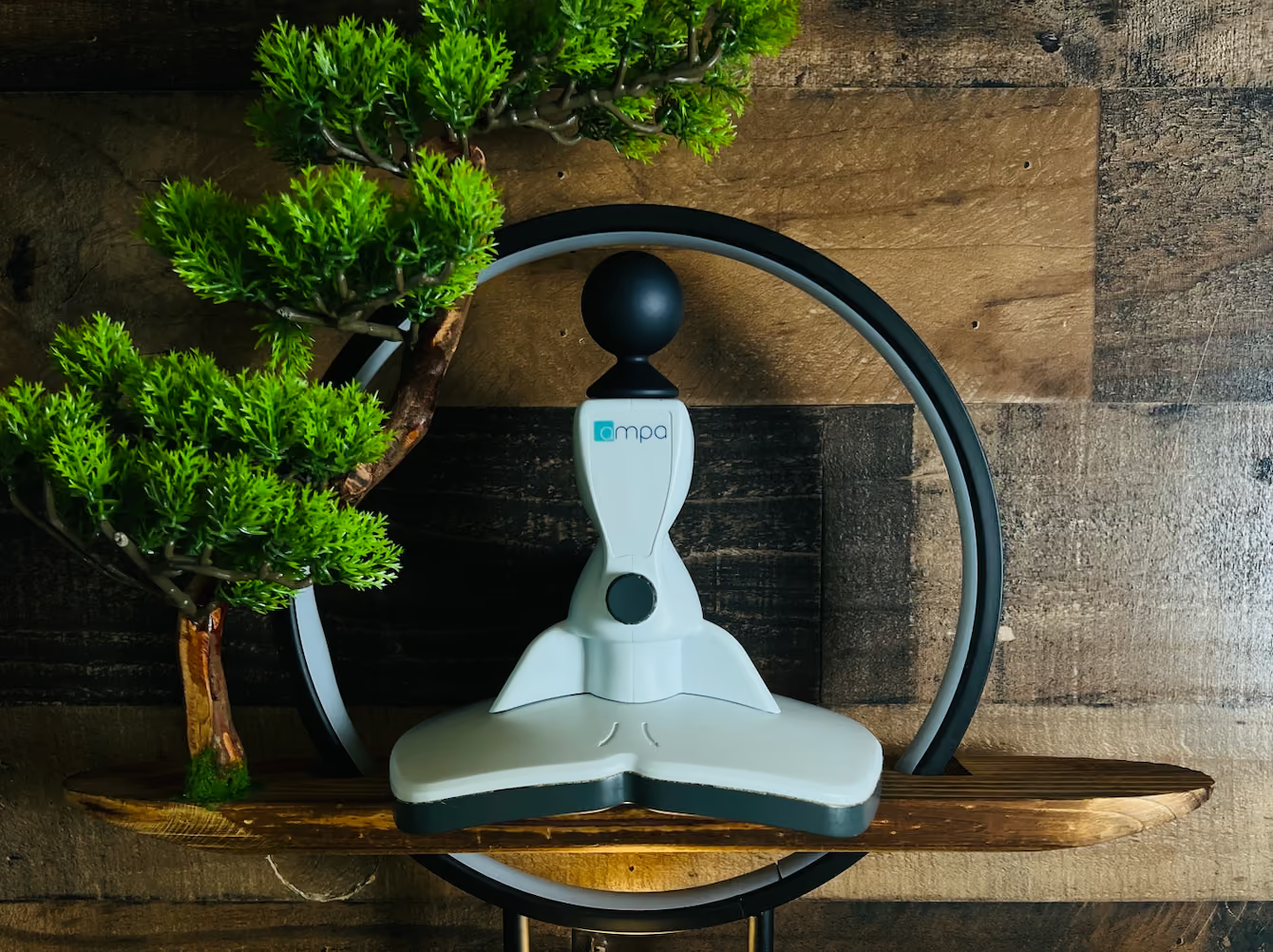
Why We Built Ampa: Making Advanced TMS Reachable for More Clinics
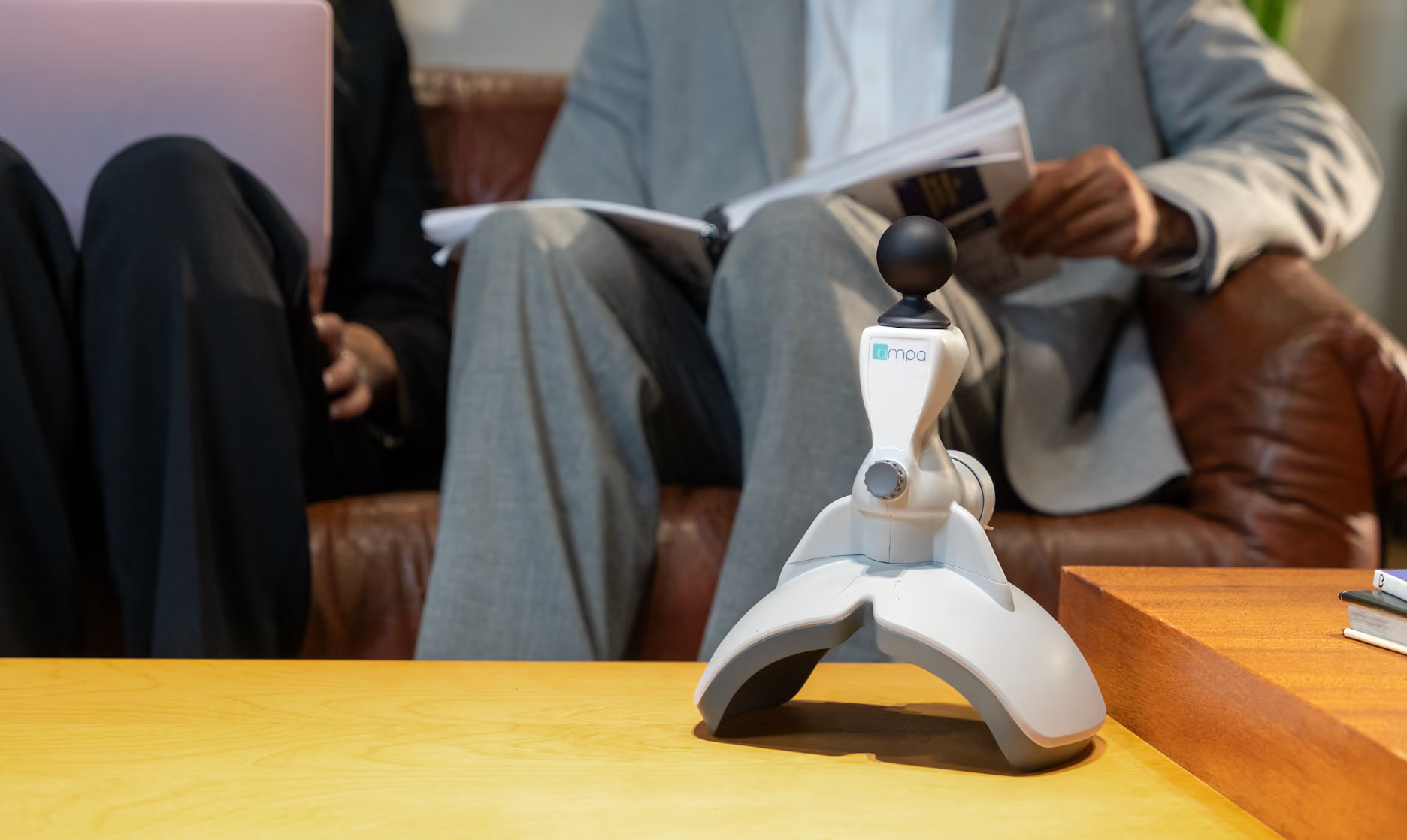
Ampa exists because too many clinics that wanted to offer TMS looked at the numbers and walked away. A new system historically meant a six-figure purchase or a per-session fee that never stopped accruing, a treatment room dedicated to a single large cart, and a protocol that asked patients to show up daily for six weeks. Each of those barriers made sense on its own, given how the technology developed. Together, they kept TMS out of reach for a lot of practices that wanted to offer it and a lot of patients who needed a non-drug option. Ampa One is our answer: a compact, US-made TMS system built around an accelerated protocol from the start, with navigation included and a leasing model that removes the per-session fee. This piece is about why we built it that way.
What was actually keeping TMS out of reach
The barriers were rarely about whether TMS worked. They were about whether a given practice could reasonably take it on. Capital cost was the first wall: a new system has traditionally required a large upfront purchase, which meant only well-capitalized practices or large centers could consider adding it. Practices that wanted a lower entry point often turned to pay-per-use arrangements instead, which solved the upfront problem but replaced it with a fee owed on every session, indefinitely — a cost that quietly erodes margin over a full course of treatment. Footprint was the second wall: many legacy systems are large, cart-based devices that need dedicated room space and workflow accommodations most practices had not built for. Time was the third wall, and arguably the largest one for patients: a standard protocol runs daily sessions for roughly six weeks, a commitment that a meaningful share of candidates simply cannot make around jobs, caregiving, or travel. A device can be clinically capable and still go unused if the economics, the space, or the schedule do not fit the practice trying to offer it.
How Ampa approached the problem
We built Ampa One around removing those specific barriers rather than adding another general-purpose system to the market. It is compact by design, so it asks less of a practice's physical space and workflow than cart-based legacy systems. It is US-made. It ships with camera-based neuronavigation included, rather than treating targeting accuracy as an optional add-on priced separately — navigation is part of the system, not an upsell. It offers both an L coil for focal stimulation and an M coil for more diffuse stimulation, so a practice is not limited to a single treatment approach. And it is built around the ONE-D accelerated protocol as a first-class use case, not a feature retrofitted onto hardware designed for the old daily schedule. On the business side, Ampa is offered on a lease with no per-session fees, so a practice's cost is predictable and its margin on each treatment stays intact as volume grows, rather than being taxed one session at a time.
Why accelerated-first design matters
Building around an accelerated protocol from the outset is a different engineering and business proposition than adding one later. A system designed for a single daily session does not need to reset, reposition, and re-target quickly, because it only has to do that once a day. A system meant to deliver several sessions in a day does. Designing for that from the start — rather than bolting an accelerated protocol onto a system built for the old cadence — is what lets a compressed schedule actually run smoothly in a working clinic, not just in a lab. That matters because the six-week commitment was never a minor inconvenience; for many patients it was the difference between starting treatment and never starting at all. A protocol that compresses that timeline, delivered on hardware built to run it well, changes who can realistically say yes to TMS. For more on how accelerated delivery translates into a practice advantage, see Accelerated TMS as a Practice Differentiator.
Why the leasing model is part of the mission, not just a pricing choice
We think of Ampa's leasing model as inseparable from the access problem, not as a separate financial feature bolted on afterward. A large upfront purchase filters out practices before they ever treat a patient. A per-session fee filters out margin from every patient they do treat. A predictable lease with no per-session charge does neither: it lowers the capital bar to start a program and lets a practice keep its full reimbursement on every session it delivers, so growth in patient volume improves the practice's economics instead of feeding a manufacturer fee. We built it this way because the goal was never just to sell a device — it was to make it realistic for more practices to say yes to offering TMS in the first place. For a closer look at how the model plays out financially, see TMS Business Models and ROI and How to Add TMS to Your Practice.
The mission behind the product
TMS is a legitimate option for patients who have not found relief through medication, and it belongs on the table as a serious alternative alongside other approaches clinicians and patients weigh, including options like ketamine and esketamine — see TMS vs. Ketamine/Esketamine for how those compare. But an option only matters if patients can actually access it, and access depends on how many clinics can realistically offer it. Every barrier we described above — cost, footprint, schedule — is also a barrier standing between a patient and a treatment that might help them. Our reason for building Ampa is straightforward: reduce the barriers on the clinic side, so more clinics can offer TMS, so more patients who need a non-drug option can get to it.
"My mother-in-law spent years cycling through medications for treatment-resistant depression, with little to show for it. TMS was the first thing that got her into remission. Watching that happen is why we built Ampa - we didn't want that outcome to depend on finding one of the few clinics that could afford to offer it. We wanted it to be something any clinic could offer and any patient could get to." - Don Vaughn, Co-Founder & CEO, Ampa
Frequently Asked Questions
Why did Ampa build a new TMS system instead of using existing devices? Because the existing barriers to offering TMS — high upfront capital, per-session manufacturer fees, large equipment footprints, and a six-week protocol — were structural, not incidental. We built Ampa One specifically to remove those barriers rather than compete on the same terms as legacy systems.
What makes Ampa One different from other TMS devices? It is a compact system built around the ONE-D accelerated protocol from the start, with camera-based neuronavigation included rather than sold separately, and it offers both an L coil and an M coil. It is offered on a lease with no per-session fees.
Why does the leasing model matter for access? A large upfront purchase and a per-session fee both create financial barriers — one before a practice starts, one on every patient afterward. A predictable lease with no per-session charge lowers the bar to start a program and protects a practice's margin as it grows.
Is Ampa only useful for practices offering accelerated protocols? No. Ampa supports both focal (L coil) and diffuse (M coil) stimulation, but it is purpose-built around the ONE-D accelerated protocol, which is where much of the practical advantage in workflow and patient access comes from.
What problem is Ampa ultimately trying to solve? Access. TMS can only help patients at practices willing and able to offer it, and that willingness depends heavily on cost, space, and schedule. Ampa is designed to make those three factors easier for more clinics to manage.
This article describes Ampa's product design and business approach. It does not make clinical efficacy, safety, or regulatory claims; consult your clinical and regulatory teams for guidance specific to your practice.

Meet the TMS system built for what’s next
Ampa One brings accelerated protocols, precision neuronavigation, a compact footprint, and a flexible subscription model together in one streamlined TMS platform.
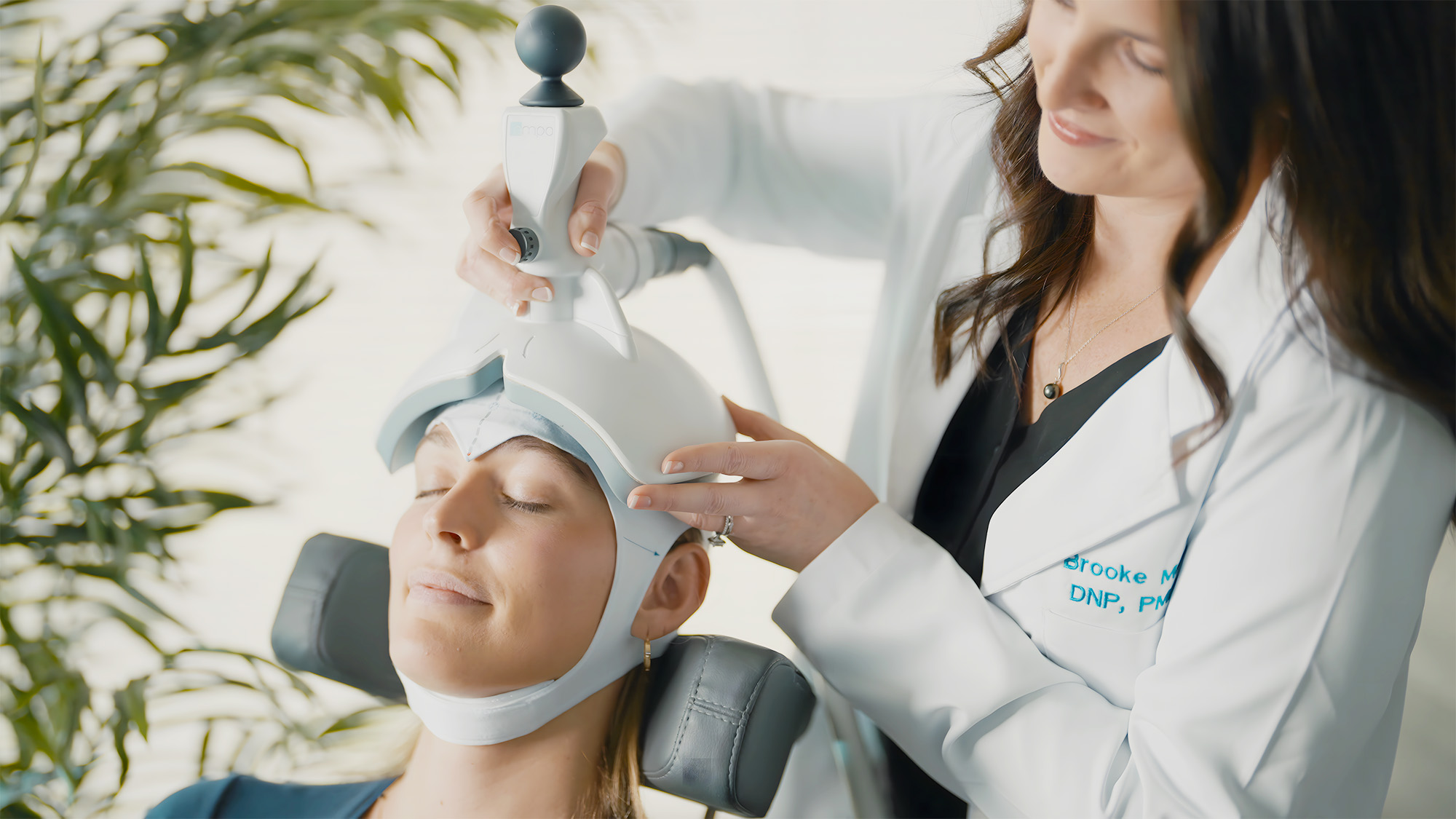

Can You Use an HSA or FSA for TMS Therapy?
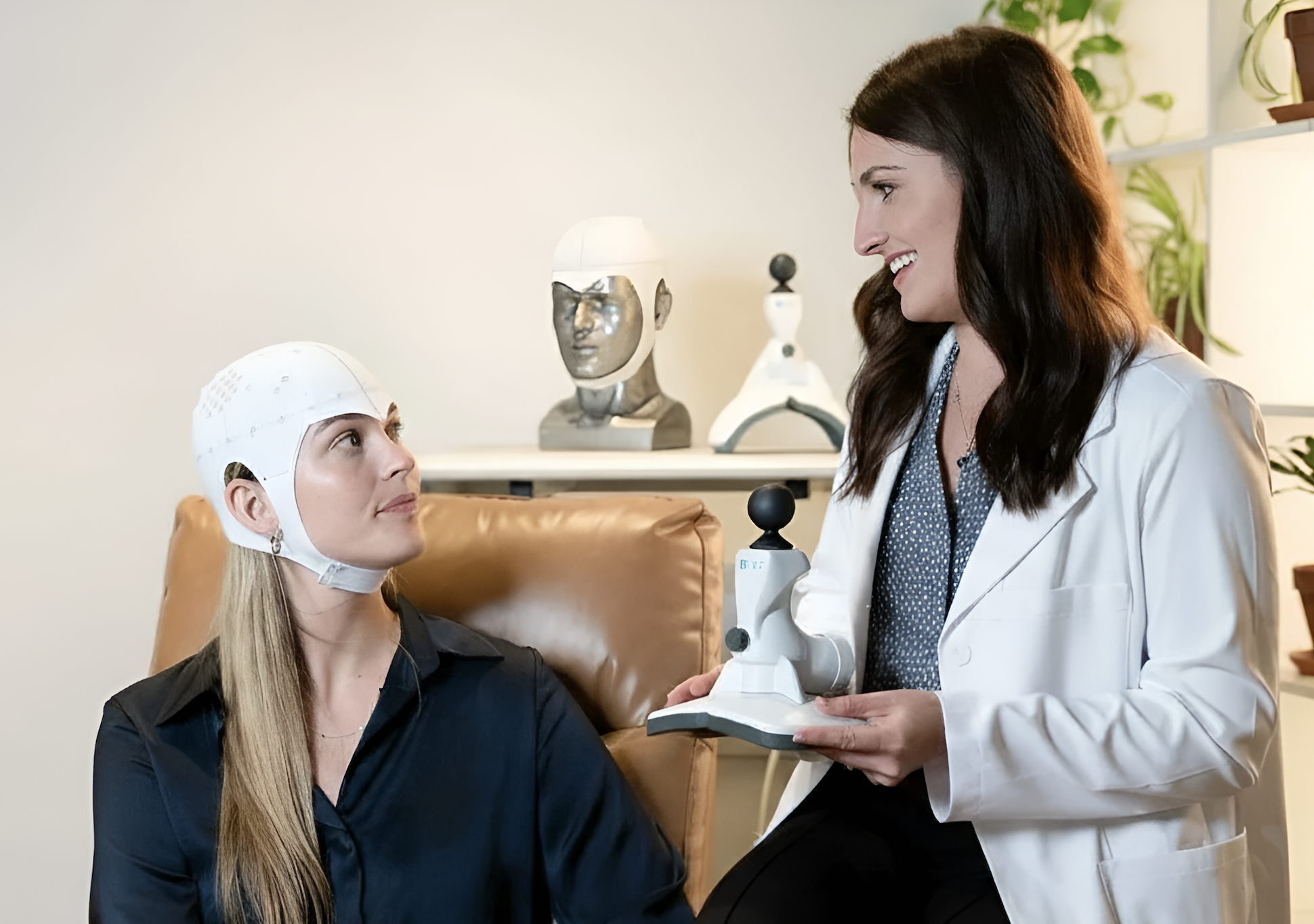
What to Expect During Your First TMS Session: The Mapping Process, Sensations, and What's Different About Day One