Staffing and Training a TMS Program: Roles, Timelines, and Avoiding the Staffing Gap
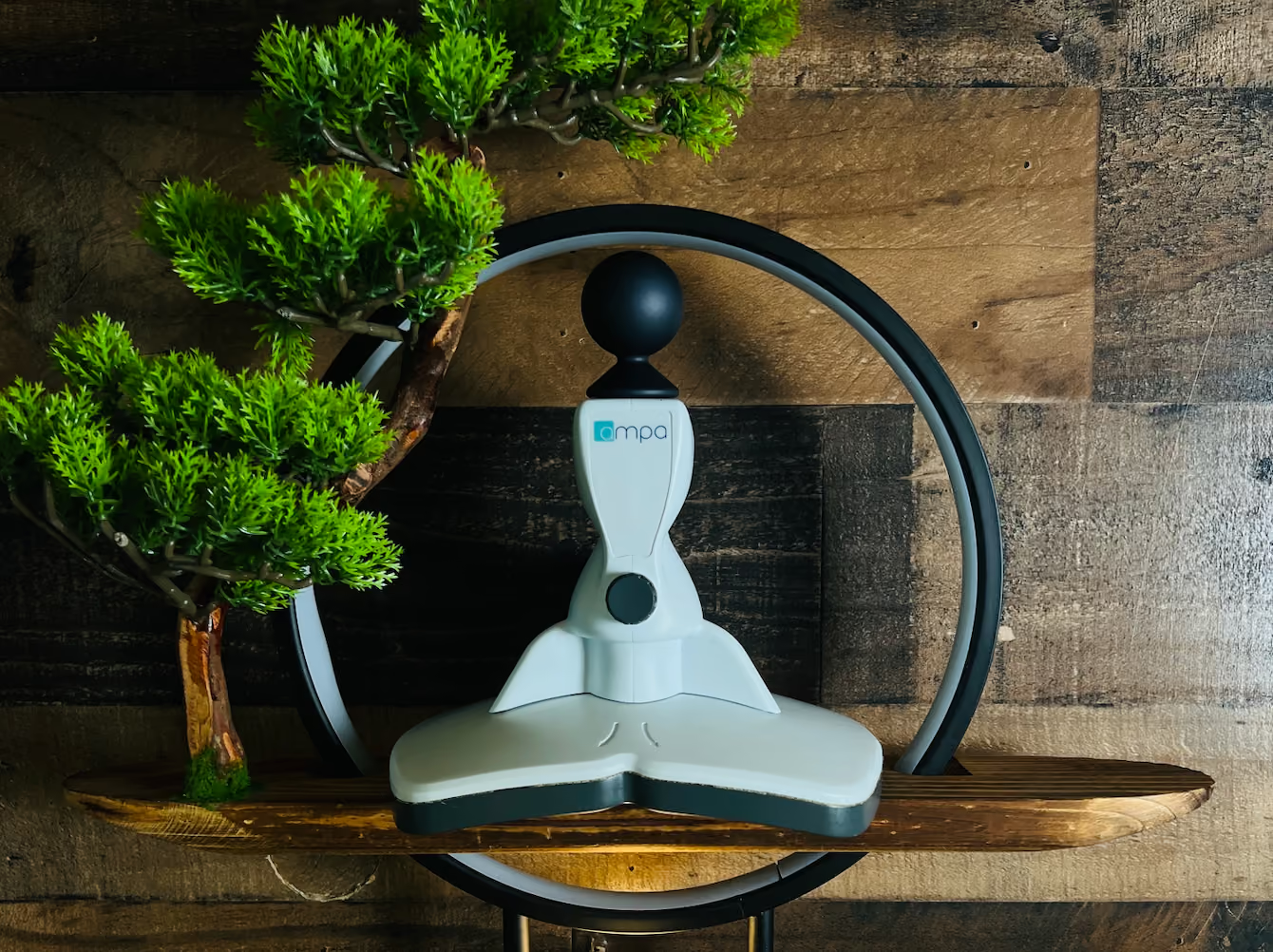
Most TMS programs succeed or fail on staffing, not technology. A practice can choose the right device, prepare the room, and secure reimbursement, and still stall before its first treatment because no one was ready to run the machine. This guide covers the roles a TMS program needs, how quickly operators can be trained on modern systems, and how to avoid the staffing gap that quietly derails new programs.
What roles does a TMS program need?
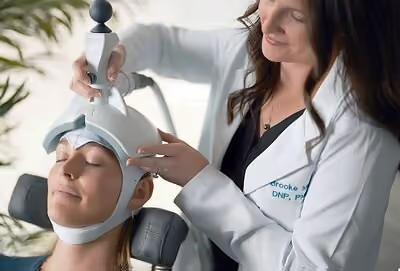
A functioning TMS program runs on two roles. The first is the prescribing and supervising physician, who evaluates candidates, confirms the diagnosis and treatment history, determines the motor threshold and protocol, and provides the clinical supervision that TMS delivery requires. The second is the TMS operator — a technician, nurse, or medical assistant who runs the daily sessions: positioning the patient, placing and holding the coil on target, delivering the protocol, and monitoring comfort throughout.
In a large center these are separate people, sometimes several operators across multiple devices. In a solo or small-group practice, one clinician may supervise while a single operator delivers treatment, and roles can overlap. What cannot be skipped is having someone reliably available to run sessions every treatment day. A device with no one to operate it treats no patients.
Why staffing is the most common failure point
The most avoidable way a TMS program fails is acquiring the device before securing the person to run it. Practices that hit staffing challenges — a technician who leaves, a hire that falls through, a clinician stretched across too many duties — frequently cannot deliver treatment and end up pausing or canceling the program entirely. The device sits idle while the cost continues.
The lesson is simple: plan staffing before the device arrives, not after. Identify your operator, confirm they have dedicated time carved out for TMS sessions, and build in a backup so a single departure does not shut the program down. Cross-training a second staff member early is cheap insurance against the most common cause of program failure.
How long does TMS operator training take?
On Ampa One, a capable operator can be trained in a single session — around half a day of focused instruction — rather than a multi-week certification course. That session typically covers system setup and testing, patient positioning, coil placement and targeting, running the protocol, and troubleshooting, followed by supervised practice run-throughs on the actual device.
Good training programs reinforce that onsite session with video training the staff can revisit, plus remote support for the first live treatments. The combination matters: the hands-on day builds competence, and the on-demand videos and support let a clinic onboard a new hire later without flying someone out again. When you evaluate devices, ask specifically how operators are trained, how long it takes, and what ongoing support and refresher materials come included.
Building a training and competency process
Beyond the initial session, a durable program treats training as a process rather than a one-time event. Keep the manufacturer's training videos accessible so new or returning staff can refresh before a shift. Document your own clinic protocols and policies — how you handle scheduling, patient intake, comfort management, and common issues — so knowledge does not live only in one person's head. When you add a second location or a second operator, that documentation is what lets you replicate the program instead of rebuilding it.
Ongoing education also keeps a program current as protocols evolve. Manufacturers and clinical communities increasingly run continuing-education sessions and peer forums where clinics share real-world operating practices; plugging your team into those keeps your operators sharp and connected to how comparable practices solve the same problems.
How does staffing scale as you grow?
Staffing scales with devices and volume, but not linearly. A single operator can keep one device busy through a full day of sessions, especially on short accelerated or theta-burst protocols where each treatment takes minutes. Adding a second device usually means adding operator capacity, but a well-documented program can often share supervision and administrative overhead across rooms. The practices that scale smoothly are the ones that documented their process at one device, so the second and third are a copy rather than a fresh build.
Frequently Asked Questions
Who can operate a TMS device? A trained technician, nurse, or medical assistant typically delivers TMS sessions under the supervision of a prescribing physician. Specific licensure and supervision requirements vary by state, so confirm your local rules.
How long does it take to train a TMS operator? On modern systems, often a single focused onsite session of roughly half a day, reinforced with video training and remote support for the first live treatments. This is much faster than the multi-week certifications older systems required.
What is the most common reason TMS programs fail? Staffing. Practices that acquire a device without a dedicated, trained operator — or without a backup when that operator leaves — frequently stall before or shortly after launch. Plan staffing before the device arrives.
Do I need more staff to offer accelerated TMS? Not necessarily. Because accelerated and theta-burst sessions are short, one operator can often deliver more treatments per day. See Accelerated TMS as a Practice Differentiator for how compressed protocols change program throughput.
This guide is for operational planning and is not legal or clinical advice. Confirm licensure, scope-of-practice, and supervision requirements for TMS operators in your state.

Meet the TMS system built for what’s next
Ampa One brings accelerated protocols, precision neuronavigation, a compact footprint, and a flexible subscription model together in one streamlined TMS platform.

How Does a TMS Coil Work? The Physics Behind Magnetic Brain Stimulation
FDA-Cleared TMS Devices Compared: Ampa One, NeuroStar, BrainsWay, MagVenture & Magstim